|
HISTORY OF KARATE - OUR
LINEAGE
HISTORY OF KARATE
Karate can be traced back to 1400 years; to Western India where Daruma (Bodhidharma)
the founder of Zen Budhism, traveled to China to lecture on Budhism,
incorporating physical and spiritual training methods that were very
demanding. The training was so harsh, that his followers were falling to
exhaustion. He then developed a method by which the followers could
enhance their physical strength to attain the essence of the way of the
Buddha. His teachings spread to many other places, it was the called
Shorin-ji Kempo.
About 500 years ago in Okinawa; a national policy was adopted,
forbidding the possession and use of all kinds of weapons. All weapons
were confiscated by the government. The development of Karate at that
time was very well received, as a means of unarmed self-defense.
Many experts who traveled between Okinawa and China contributed greatly
to bringing Karate to its present level.
In Okinawa, Karate developed from the synthesis of two fighting
techniques.
The first one, used by the inhabitants of Okinawa, very simple, yet
terribly effective and very close to reality since it was used for many
centuries in real combat. The second one, was much more complicated
based on the philosophical teachings, which was a product of the ancient
culture of China.
THE INFLUENCE OF MASTER GICHIN FUNAKOSHI (1868-1957)
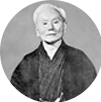
Master Gichin Funakoshi is known as the father of modern karate, who was
also a school teacher, poet, and calligrapher. He was born in Shuri,
Okinawa in 1868. He began his Karate studies at the age of 11. He was a
student of the two greatest masters of the time, Masters Azato, Itosu,
and Matsumura, among others. He became so proficient, that he was
initiated into all the major styles of Karate in Okinawa at the time.
Master Funakoshi introduced Karate to mainland Japan in 1916. His
training in Karate-Do became an education for life.
Training in Karate was conducted with utmost secrecy in Okinawa. It was
never taught or trained openly as it is done today. This is why original
books or written records of Karate are almost non-existent.
At the beginning of the Meiji period (1868-1912) while recruiting for
the military, the government recognized that the young men with Karate
training were very impressive. They were well balanced, very flexible,
and had very good muscle development.
It was strongly recommended to the Ministry of Education that Karate be
introduced as part of the physical education program. This
recommendation was accepted and initiated by the schools in 1902.
The foundation of Shotokan Karate comes from a combination of two
different styles practiced by Master Funakoshi: Shorin and Shorei
These styles stressed different aspects of training, as did the katas
and the formal basics, which were borrowed from these styles.
Shorin Kata emphasized development of speed and body shifting, as the
Shorei Kata emphasized development of muscular strength.
In 1906, Master Gichin Funakoshi persuaded some friends to give public
demonstrations, to which many prominent people were invited.
In 1916, he gave a demonstration at the Butokuden in Kyoto, Japan, which
at that time was the official center of all martial arts.
Master Funakoshi introduced Karate to mainland Japan in 1916.
In 1921, the Emperor of Japan requested a demonstration by Master
Funakoshi and his students.
In 1922, the Ministry of Education held its First National Athletic
Exhibition in Tokyo, and requested a Karate exhibition to be given at
that time.
In 1936, the first Karate Dojo or school was opened in Japan by Master
Gichin Funakoshi’s students. It was called “Shotokan”, after Master
Funakoshi’s pen name. Shoto- Pen name given to the Master for his
poetry, and calligraphy, denoting the sound of the wind blowing through
pines, and kan meaning house.
The name of the style which he then taught, became known as “SHOTOKAN”
Shotokan is characterized by its powerful and linear techniques coupled
with deep strong stances which were developed to accommodate the larger
physical statures of the Japanese practitioners.
After World War II, the sentiments of anti-martial arts decreased among
the armed forces, Karate practice began a re-birth. In the year 1948,
the Japan karate Association was formed as the organization for Shotokan
Karate, under the direction of Master Gichin Funakoshi. Unfortunately,
discontent arose among many of Master Funakoshi’s senior instructors,
because the organization required that karate would be taught for a
profit. However, karate was introduced to foreign countries on a
demonstration basis.
Several years later, the discontent became more intense among the
instructors, as college rivalry also played a big part in what became a
departure of several of the seniors.
One of the large split groups assumed the name “Shotokai” and still a
large influence in Japan today. The (JKA) Japan Karate Association
remains the mainline Shotokan group with Masatoshi Nakayama as chief
instructor, taking over for the aging Funakoshi, who died in 1957.
In later years, many changes took place. After many stable years,
discontent again arose in the JKA, first with the departure of Hirozaku
Kanazawa, who formed his own Shotokan organization “Shotokan karate
International”. Later, other senior instructors left to either form
their own groups or align themselves with other former JKA groups.
In the 1980’s a dispute arose between the JKA headquarters and one of
the senior instructors, resulting in a court battle over the rights to
the JKA name, and after years of litigation, the rights were awarded to
the headquarters group.
Today, many JKA instructors have left the headquarters group,
re-aligning themselves with competing groups or remained independent.
With these many splits, some changes in the forms have been instituted,
but the essence of Shotokan has remained. Many Shotokan groups have
gravitated towards each other and have become very cohesive.
Shotokan remains a very popular style throughout the world.
Today; everywhere in Japan and the rest of the world we hear the voices
of Karate training.
Mr. Ohshima was born in 1930. By the age of 5, he had already begun the
disciplined and rigorous world of Japanese martial arts. He pursued sumo
wrestling, kendo, and judo from the age of 5 to 15 years.
In 1955 Mr. Tsutomu Ohshima, one of Master Funakoshi’s last direct
students, came to the United States, and was the first person to teach
Karate to the US public.
He is the founder and Shihan (Chief Instructor) of Shotokan Karate of
America (SKA)
OUR LINEAGE
Master Tomasaburo Okano, a devoted student of Master Gichin Funakoshi,
opened a school of Shotokan karate in Japan, under the guidance of
Master Gichin Funakoshi.
Born in Tokyo, Japan; Mr. Toyotaro Miyazaki began studying Karate at the
age of 15, and Mr. Masakatsu Takahashi who were studying under Master
Tomasaburo Okano. In 1967, Mr. Miyazaki and Mr Takahashi came to the
United States under the direction of Master Okano; and Mr. Miyazaki
became the chief instructor of Tokutai Karate-Do and head of the U.S
KENKO-JUKU ORGANIZATION”.
Mr. Miyazaki immediately established a name for himself by winning in
American tournaments. Many titles fell to his excellent kick and punch
combinations, and his ability to outstare any opponent. He was one of
the premier Karate tournament fighters, as well as forms. He maintained
a top 10 ranking in the country for two decades, from 1960’s to 1980’s.
He retired from competition for 10 years, coming back in the 80’s to
keep winning and remain one of the best in the country, in forms as well
as in weapons. His reverse punch was so fast, that it was compared to
the movement of a lizard tongue.
He is one of the most loved and prominent instructors of the East Coast.
At the present time he is directing his own organization “T. Miyazaki’s
U.S. Shoto-Kai”
Mr. Takahashi is very well known for his strength and power. He is
actually the president of the Kenko-Juku Organization in the United
States.
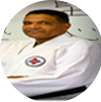
In 1975, Sensei Jorge Decena and Sensei Nixon Feliz began to study
Karate under one of Sensei Miyazaki’s students, Mr. Kevin Burke who
later changed his name to Seifullah Ali Shabbazz. In 1981, Sensei Decena
and Sensei Feliz obtained their First Degree Black Belts under Sensei
Toyotaro Miyazaki.
They began teaching in 1980, under the direction of Master Miyazaki and
became two of the best competitors in the East Coast.
|
|